


DIY Remote Control Paper Airplane Kit

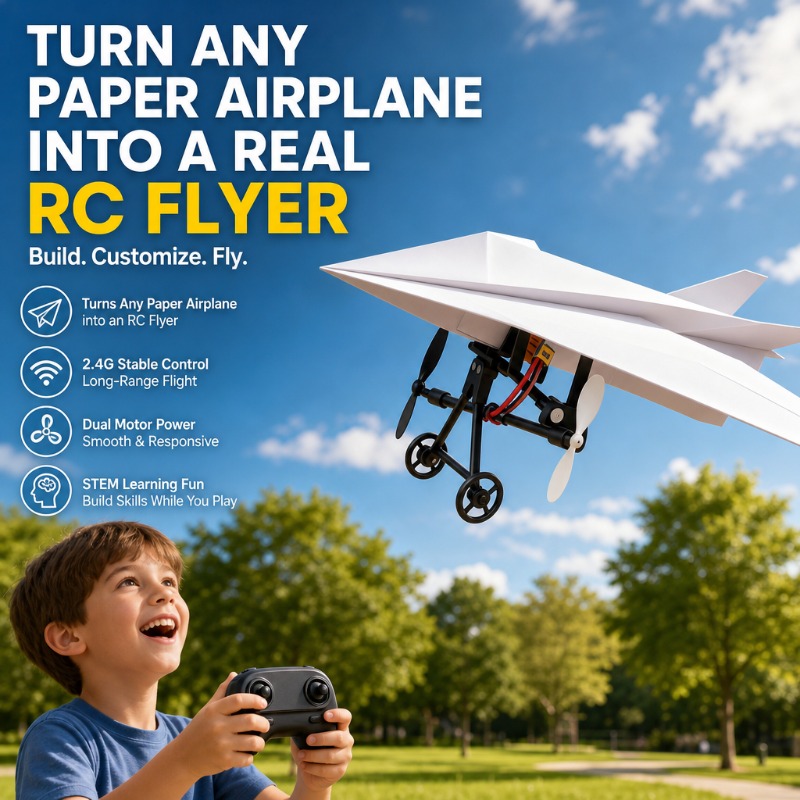
Turn Any Paper Airplane into a Remote-Control Flyer
Instantly upgrade your hand-folded paper planes with real electric power. Clip on the module, grab the 2.4G remote, and experience the thrill of piloting your own creation through the skies.
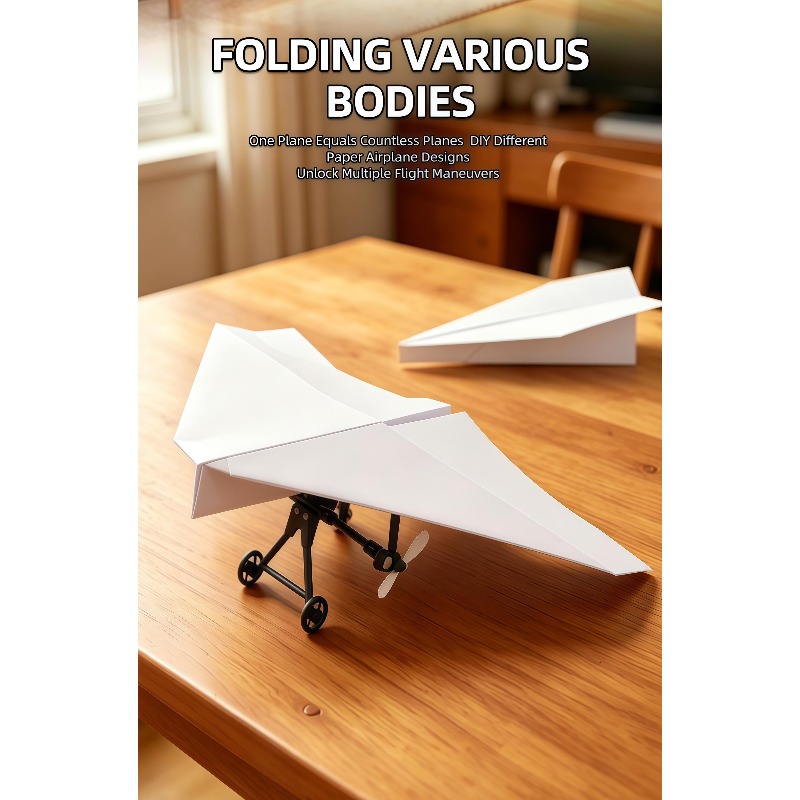
Endless DIY Creativity
The clever clip-on design works with a wide variety of paper airplane folds. Experiment with different shapes—from sleek darts to wide gliders—to see how they fly under power. It's a new challenge every time you fold.
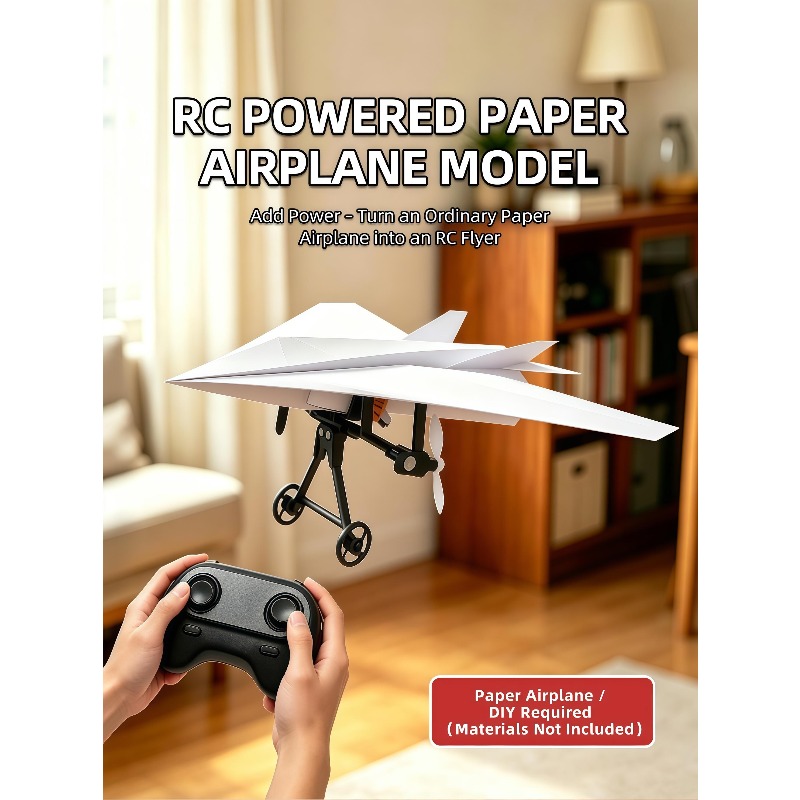
Precision Twin-Prop Control
Powered by dual motors, this kit provides both thrust and steering. The included 2.4G remote gives you stable, long-range control to perform turns, climbs, and smooth glides outdoors or in large indoor spaces.
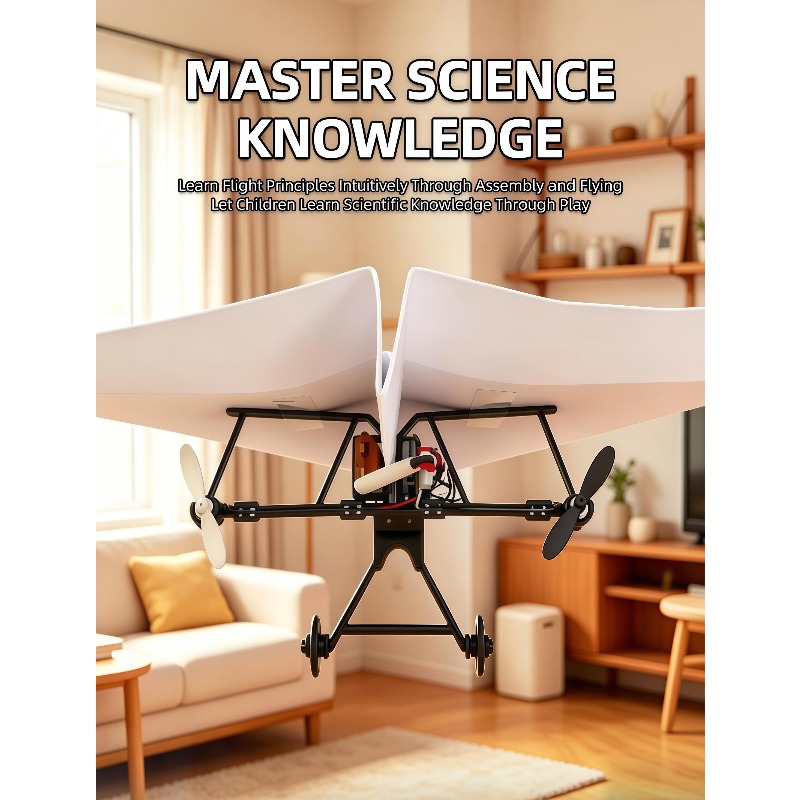
Learn Science Through Play
Turn playtime into a hands-on STEM lesson. By building, adjusting, and flying their own aircraft, kids intuitively learn about aerodynamics, balance, and basic electronics. It's educational fun that soars.
Product Specifications
| Product Type | DIY RC Paper Airplane Power Kit |
|---|---|
| Module Dimensions | Approx. 4.33 in (Width) x 2.76 in (Length) |
| Control Frequency | 2.4 GHz |
| Materials | ABS Plastic, Electronic Components |
| Remote Battery | Requires 3 x AAA Batteries (Not Included) |
| Recommended Paper | A4 Size, 80-100 gsm |
| What's in the Box | Power Module, Landing Gear, Remote Controller, Rechargeable Battery (for module), USB Charging Cable, Screwdriver, Spare Propeller Set |
Frequently Asked Questions
What kind of paper works best?
We recommend using standard A4 printer paper (around 80-100 gsm). Heavier cardstock may be too heavy for the motors, while very thin paper might be too flimsy.
Where is the best place to fly my RC paper plane?
For the best experience, fly in a wide-open area with no wind, such as a large backyard, park, or gymnasium. Avoid areas with trees, buildings, or power lines.
How do I control the plane's direction?
The remote uses differential thrust. Moving the steering stick changes the speed of the left and right propellers independently, causing the plane to turn left or right.